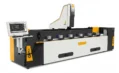

For aluminum fabrication factory managers and production engineers, one of the most frequently asked questions before new equipment investment is whether a CNC automatic door & window curtain wall machine can seamlessly connect with an existing CNC machining center and CNC machining equipment. Many small and mid-sized fabricators already have mature machining centers for cutting, milling and hole making on standard aluminum extrusions, and they do not want to rebuild the whole workshop layout just to add curtain wall processing capacity. Based on our years of experience supporting aluminum profile processing factories, the short answer is yes — but smooth coordination depends on clear planning of fixture standards, data format compatibility and material transfer workflow.
A standard CNC automatic door & window curtain wall machine is built for special profile processing tasks unique to facade, door and curtain wall components, including end milling, tenon making, lock slot machining and multi-angle drilling for connecting brackets. It complements rather than replaces your CNC machining center. Most general-purpose CNC machining equipment handles regular plate and solid aluminum parts efficiently, while curtain wall profiles have long, thin cross-sections and strict assembly tolerance requirements. If you simply feed curtain wall profiles into a universal machining center, you may face vibration, deformation and inconsistent positioning errors, which will increase rejection rates for high-standard curtain wall projects.
The key to successful line integration starts with software compatibility. You need to confirm whether the control system of the curtain wall machine supports importing the same DXF and G-code files used on your CNC machining center. Some low-cost models only support proprietary programming software, which forces operators to re-draw every profile drawing twice and creates extra manual work. Second, consider the clamping and fixture system. Curtain wall profile fixtures are usually long-gauge pneumatic clamping modules, different from the vise fixtures commonly fitted on CNC machining equipment. Talk with your supplier to confirm custom fixture adaption, so profiles can maintain the same datum reference across different machines. This consistency is critical for curtain wall assemblies that require dozens of pre-processed parts to fit precisely on site.
Workshop logistics and operator training are also easy-to-overlook factors that determine whether your combined line can reach the designed output. If your CNC machining center sits in one processing zone and the new CNC automatic door & window curtain wall machine is placed far away, material handling time will eat away your efficiency gains. Many experienced factories arrange them in sequence: the machining center completes rough machining of raw aluminum profiles first, then semi-finished profiles move to the curtain wall machine for special feature processing. This workflow balances machine load and avoids bottlenecks.
We also suggest running sample batch testing before mass production. Prepare 5–10 pieces of typical curtain wall profiles, process them through both your CNC machining equipment and the new curtain wall machine, then check dimension tolerance and assembly fit. This test helps expose hidden problems such as coordinate offset, feeding speed mismatch or tool path conflicts before you sign off the final order.
FAQ
Q: Do I have to replace my old CNC machining center if I buy a CNC automatic door & window curtain wall machine? A: No. Most modern curtain wall CNC machines are designed to work as a supplementary station. As long as your existing CNC machining equipment meets basic precision standards, you can keep it in the production line. Q: Is there extra cost for integration between curtain wall machine and CNC machining center? A: It depends. Standard software protocol matching is usually included. Custom fixtures, conveyor transfer tables and secondary programming training may bring extra charges, you should clarify all integration items in the quotation.


