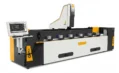

If you work with aluminum profiles, extrusions, tubes, or structural components, choosing the right cutting saw is one of the most critical decisions you’ll make for your business. The wrong machine leads to uneven cuts, burrs, wasted material, slow production, and costly downtime.
This guide walks you through every key factor to consider when selecting an aluminum cutting saw, whether you’re building aluminum windows, curtain walls, solar frames, automotive parts, or custom industrial projects. We’ll cover types, features, precision levels, and how to match a saw to your workflow—so you can invest confidently.
1. Why Your Aluminum Cutting Saw Choice Matters
Aluminum is soft, heat-sensitive, and prone to melting or warping if cut incorrectly. Unlike wood or steel, it requires specific saw speeds, blade designs, and rigidity to deliver clean, burr-free cuts.
The right saw will:
✅ Deliver consistent cut accuracy (critical for assembly fit).
✅ Reduce secondary operations like deburring or sanding.
✅ Improve production speed and throughput.
✅ Minimize material waste from errors or uneven cuts.
✅ Extend blade life and reduce maintenance costs.
For businesses manufacturing aluminum window frames, curtain wall components, solar mounting frames, or automotive aluminum parts, even a small drop in precision can lead to costly rework or rejected orders.
2. Types of Aluminum Cutting Saws: Which One Fits Your Workflow?
Start by matching the machine type to your production scale and application.
2.1 Manual Aluminum Cut-Off Saws
Best for: Small workshops, low-volume jobs, or one-off projects.
– Pros: Low cost, easy to use, minimal maintenance.
– Cons: Slow for large batches, operator-dependent precision, not ideal for complex angles.
– Common uses: Repair shops, small custom fabricators, occasional cutting tasks.
2.2 Semi-Automatic Aluminum Cutting Saws
Best for: Medium-volume production (50–500 cuts/day), aluminum window factories, and standard extrusion work.
– Pros: Balanced cost and efficiency, consistent feed control, cleaner cuts than manual models.
– Cons: Limited automation, still requires manual loading/unloading.
– Common uses: Window and door frame production, standard aluminum extrusions, medium-volume parts.
2.3 CNC Aluminum Cutting Saws
Best for: High-volume production, precision parts, and complex profiles.
– Pros: Programmable cuts, repeatable accuracy, automatic feeding, reduced labor costs.
– Cons: Higher initial investment, requires basic CNC training.
– Common uses: Solar frame production, automotive aluminum parts, curtain wall engineering, mass-produced components.
CNC Saw Variations:
– Single-Head CNC Saws: Great for straight cuts and basic angled cuts in medium volumes.
– Double-Head CNC Saws: Ideal for window and door manufacturing—cuts both ends of a profile at once, drastically boosting efficiency.
– Automatic Feeding CNC Saws: For high-throughput factories with continuous production lines, minimizing manual handling.
2.4 Specialized Saws for Specific Applications
– Aluminum Window & Door Profile Saws: Optimized for frame profiles, with angle stops for 45° and 90° cuts.
– Aluminum Pipe & Tube Cutting Machines: Designed for hollow profiles, preventing distortion during cutting.
– Aluminum Curtain Wall Processing Saws: Built for large, thick profiles with high rigidity to maintain precision.
3. Key Technical Features to Compare
When evaluating specific models, focus on these critical features:
3.1 Cutting Precision & Accuracy
Precision is non-negotiable for aluminum assemblies. Look for:
– Linear Tolerance: ±0.1mm for CNC models, ±0.2–0.5mm for semi-automatic machines.
– Angle Tolerance: ±0.1° for precise miters (critical for window frames).
– Repeatability: The ability to produce identical cuts on every piece, even in long production runs.
3.2 Cutting Capacity
Check the machine’s maximum cutting size against your typical profiles:
– Blade Diameter: 400mm–600mm is common for industrial use; larger blades handle deeper cuts.
– Maximum Profile Size: Ensure the machine accommodates your largest extrusions or tubes.
– Minimum Cut Length: Important for short pieces (e.g., small solar frame brackets).
3.3 Blade & Motor Specifications
The blade and motor directly impact cut quality and speed:
– Blade Type: Tungsten carbide-tipped (TCT) blades with triple-chip grind (TCG) teeth are ideal for aluminum. Negative hook angles prevent binding and kickback.
– Tooth Count: Higher teeth (80–100T) for thin sheets; lower teeth (40–60T) for thick extrusions.
– Motor Power: 2.2kW–5.5kW for most applications; 7.5kW+ for heavy-duty industrial use.
– Spindle Speed: 3,000–4,000 RPM for clean cuts without melting aluminum.
3.4 Automation & Workflow Features
– Automatic Feeding: Reduces labor and speeds up production.
– Digital Readouts (DRO): For semi-automatic models to ensure accurate measurements.
– Programmable CNC Controls: Store cut recipes for repeat jobs.
– Pneumatic Clamping: Holds profiles securely to prevent movement during cutting.
– Chip Extraction System: Collects aluminum chips to keep the workspace clean and prevent blade damage.
3.5 Safety & Durability
– Guarded Cutting Area: Prevents contact with the moving blade.
– Emergency Stop Buttons: For quick shutdown in case of issues.
– Sturdy Frame Construction: Heavy-duty steel frames reduce vibration, improving precision and extending blade life.
4. Matching the Saw to Your Industry
Different applications have unique requirements:
Aluminum Window & Door Factories
– Top Choice: Double-head CNC saws or semi-automatic profile saws.
– Why: Fast, accurate 45° and 90° cuts for frame assembly.
Curtain Wall Engineering
– Top Choice: Heavy-duty single-head CNC saws or curtain wall-specific saws.
– Why: Handles large, thick profiles with high rigidity for precise structural components.
Automotive Aluminum Parts
– Top Choice: High-precision CNC cutting saws.
– Why: Tight tolerances required for fit in vehicle assemblies.
Solar Frame Production
– Top Choice: Automatic feeding CNC saws.
– Why: High throughput for large volumes of identical profiles.
5. Common Mistakes to Avoid
❌ Choosing Based on Price Alone: Cheaper manual saws may save money upfront but lead to higher costs from waste, rework, and downtime.
❌ Ignoring Blade Compatibility: Using wood-cutting blades on aluminum causes burrs, melting, and blade damage.
❌ Overlooking Maintenance Needs: CNC saws require regular calibration, blade changes, and lubrication to maintain precision.
❌ Not Planning for Future Growth: A saw that meets your current needs may become obsolete if your production volume increases.
6. Maintenance Tips to Extend Your Saw’s Life
– Clean chips from the machine after every shift.
– Lubricate moving parts weekly.
– Check blade alignment and tension monthly.
– Replace worn blades promptly to avoid burrs or poor cuts.
– Calibrate the machine’s accuracy quarterly (or as recommended by the manufacturer).
7. Final Thoughts
Choosing the right aluminum cutting saw is an investment in your production quality, efficiency, and profitability. By matching the machine type, features, and precision to your specific applications, you can avoid common pitfalls and select a tool that grows with your business.
Whether you’re just starting out with a semi-automatic saw or scaling up to a full CNC line, the key is to prioritize accuracy, durability, and alignment with your workflow.
If you’d like to explore our range of aluminum cutting saws—including CNC, semi-automatic, and specialized models for windows, curtain walls, and solar frames—feel free to contact us for a customized recommendation.


