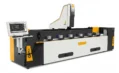
如果您从事铝型材、挤压件、管材或结构件的加工,选择合适的切割锯是您业务中最关键的决策之一。错误的机器会导致切割不均匀、毛刺、材料浪费、生产效率低下以及代价高昂的停机时间。
无论您是制作铝合金门窗、幕墙、太阳能框架、汽车零部件,还是定制工业项目,本指南都将带您了解选择铝材切割锯时需要考虑的每一个关键因素。我们将介绍切割锯的类型、功能、精度等级,以及如何根据您的工作流程选择合适的切割锯——让您能够安心投资。
1. 为什么选择合适的铝材切割锯至关重要
铝材质地柔软,对热敏感,切割不当容易熔化或变形。与木材或钢材不同,切割铝材需要特定的锯速、刀片设计和刚性,才能获得干净利落、无毛刺的切口。
合适的锯机能够:
✅ 提供一致的切割精度(对装配配合至关重要)。✅
减少二次加工,例如去毛刺或打磨。✅
提高生产速度和产量。✅
最大程度地减少因切割误差或不均匀造成的材料浪费。✅
延长锯片寿命并降低维护成本。
对于生产铝窗框、幕墙组件、太阳能安装框架或汽车铝制零件的企业来说,即使精度略有下降,也可能导致代价高昂的返工或订单被拒收。
2. 铝材切割锯的类型:哪一种适合您的工作流程?
首先要根据您的生产规模和应用需求选择合适的机器类型。
2.1 手动铝材切割锯
最适合:小型工作室、小批量工作或一次性项目。
优点:成本低、易于使用、维护量少。
缺点:大批量处理速度慢,精度取决于操作员,不适用于复杂角度。
– 常见用途:修理店、小型定制加工商、偶尔的切割任务。
2.2 半自动铝材切割锯
最适合:中等批量生产(每天 50-500 切割)、铝合金门窗工厂和标准挤压加工。
优点:成本和效率均衡,进给控制稳定,切割比手动机型更干净利落。
缺点:自动化程度有限,仍需人工装卸。
– 常见用途:门窗框生产、标准铝挤压型材、中等批量零件。
2.3 CNC铝切割锯
最适合:大批量生产、精密零件和复杂型材。
优点:可编程切割、可重复的精度、自动送料、降低人工成本。
缺点:前期投资较高,需要基本的数控机床操作培训。
– 常见用途:太阳能框架生产、汽车铝制零件、幕墙工程、批量生产的零部件。
数控锯机种类:
– 单头数控锯:非常适合中等批量的直线切割和基本角度切割。
– 双头数控锯:非常适合门窗制造——一次切割型材的两端,大大提高效率。
– 自动送料数控锯:适用于具有连续生产线的高产量工厂,最大限度地减少人工操作。
2.4 特殊用途的专用锯
– 铝合金门窗型材锯:针对框架型材进行了优化,带有 45° 和 90° 切割角度挡块。
– 铝管切割机:专为空心型材设计,防止切割过程中变形。
– 铝幕墙加工锯:专为大型、厚型材设计,刚性高,可保持精度。
3. 主要技术特性对比
在评估具体型号时,请重点关注以下关键特征:
3.1 切割精度和准确度
铝制组件的精度至关重要,不容妥协。请注意:
– 线性公差:CNC 机型为 ±0.1mm,半自动机型为 ±0.2–0.5mm。
– 角度公差:±0.1°,实现精确斜接(对窗框至关重要)。
– 可重复性:即使在长时间生产中,也能保证每件产品切割效果完全相同。
3.2 切割能力
请将机器的最大切割尺寸与您常用的切割轮廓进行比对:
– 刀片直径:400mm–600mm 是工业用途的常见尺寸;更大的刀片可以处理更深的切割。
– 最大型材尺寸:确保机器能够容纳您最大的挤压型材或管材。
– 最小切割长度:对于短件(例如小型太阳能框架支架)来说很重要。
3.3 Blade & Motor Specifications
The blade and motor directly impact cut quality and speed:
– Blade Type: Tungsten carbide-tipped (TCT) blades with triple-chip grind (TCG) teeth are ideal for aluminum. Negative hook angles prevent binding and kickback.
– Tooth Count: Higher teeth (80–100T) for thin sheets; lower teeth (40–60T) for thick extrusions.
– Motor Power: 2.2kW–5.5kW for most applications; 7.5kW+ for heavy-duty industrial use.
– Spindle Speed: 3,000–4,000 RPM for clean cuts without melting aluminum.
3.4 Automation & Workflow Features
– Automatic Feeding: Reduces labor and speeds up production.
– Digital Readouts (DRO): For semi-automatic models to ensure accurate measurements.
– Programmable CNC Controls: Store cut recipes for repeat jobs.
– Pneumatic Clamping: Holds profiles securely to prevent movement during cutting.
– Chip Extraction System: Collects aluminum chips to keep the workspace clean and prevent blade damage.
3.5 Safety & Durability
– Guarded Cutting Area: Prevents contact with the moving blade.
– Emergency Stop Buttons: For quick shutdown in case of issues.
– Sturdy Frame Construction: Heavy-duty steel frames reduce vibration, improving precision and extending blade life.
4. Matching the Saw to Your Industry
Different applications have unique requirements:
Aluminum Window & Door Factories
– Top Choice: Double-head CNC saws or semi-automatic profile saws.
– Why: Fast, accurate 45° and 90° cuts for frame assembly.
Curtain Wall Engineering
– Top Choice: Heavy-duty single-head CNC saws or curtain wall-specific saws.
– Why: Handles large, thick profiles with high rigidity for precise structural components.
Automotive Aluminum Parts
– Top Choice: High-precision CNC cutting saws.
– Why: Tight tolerances required for fit in vehicle assemblies.
Solar Frame Production
– Top Choice: Automatic feeding CNC saws.
– Why: High throughput for large volumes of identical profiles.
5. Common Mistakes to Avoid
❌ Choosing Based on Price Alone: Cheaper manual saws may save money upfront but lead to higher costs from waste, rework, and downtime.
❌ Ignoring Blade Compatibility: Using wood-cutting blades on aluminum causes burrs, melting, and blade damage.
❌ Overlooking Maintenance Needs: CNC saws require regular calibration, blade changes, and lubrication to maintain precision.
❌ Not Planning for Future Growth: A saw that meets your current needs may become obsolete if your production volume increases.
6. Maintenance Tips to Extend Your Saw’s Life
– Clean chips from the machine after every shift.
– Lubricate moving parts weekly.
– Check blade alignment and tension monthly.
– Replace worn blades promptly to avoid burrs or poor cuts.
– Calibrate the machine’s accuracy quarterly (or as recommended by the manufacturer).
7. Final Thoughts
选择合适的铝材切割锯是对您产品质量、效率和盈利能力的一项投资。通过根据您的具体应用需求匹配机器类型、功能和精度,您可以避免常见的陷阱,并选择一款能够伴随您的业务发展而不断成长的工具。
无论您是刚开始使用半自动锯,还是扩展到完整的数控生产线,关键都是要优先考虑精度、耐用性和与您的工作流程的一致性。
如果您想了解我们的铝切割锯系列产品——包括数控切割锯、半自动切割锯以及用于窗户、幕墙和太阳能框架的专用型号——欢迎随时联系我们,我们将为您提供定制建议。