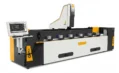

Abnormal alarms and loud strange noise are frequent malfunctions of single-head and double-head aluminum profile cutting saws during daily production. Sudden machine alarms will force production to stop, reducing workshop output. Continuous abnormal noise reflects hidden mechanical faults. If left unhandled, the problems will aggravate component wear, trigger more serious breakdowns and even shorten the whole machine’s service life.
This article sorts out common alarm triggers, noise root causes and targeted troubleshooting steps, helping operators quickly locate faults and restore normal equipment operation.
Part 1: Common Machine Alarms & Corresponding Solutions
1. Positioning system alarm
This alarm mostly appears on double-head cutting saws. It is caused by dirty limit sensors, blocked sliding rails, loose data lines or offset zero calibration.
Solutions:
– Wipe the surface of proximity sensors to remove aluminum scraps and dust;
– Clean the guide rail and add special lubricating oil to eliminate sliding resistance;
– Check whether the sensor wiring is loose, re-plug the cable tightly;
– Re-calibrate the origin position of two saw heads to reset positioning parameters.
2. Hydraulic and clamping alarm
The system sends an alarm when the profile fails to clamp or the hydraulic pressure is insufficient. The main reasons include low hydraulic oil level, blocked oil pipes, aging sealing rings and loose clamping cylinders.
Solutions:
– Check the hydraulic oil tank and supplement standard hydraulic oil to the specified liquid level;
– Clean filter elements and unclog blocked oil pipelines;
– Replace aging rubber sealing rings to prevent oil leakage and pressure loss;
– Adjust the cylinder stroke to ensure the fixture tightly locks aluminum profiles.
3. Motor overload alarm
Overload alarm pops up when the spindle or walking motor bears excessive load, triggered by dull saw blades, unmatched cutting speed or stuck aluminum chips.
Solutions:
– Stop the machine and inspect the saw blade; replace passivated blades with new sharp ones;
– Clean aluminum residues stuck between saw teeth to reduce cutting resistance;
– Lower the feeding speed properly for thick aluminum profiles to avoid forced cutting;
– Check motor cooling fans to guarantee heat dissipation.
4. Safety protection alarm
Safety door open, emergency stop button triggered or foreign matter blocking the workbench will activate safety alarms.
Solutions:
– Close the protective door tightly and confirm the door sensor is well contacted;
– Reset the emergency stop button if it is pressed accidentally;
– Clear aluminum scraps and foreign objects on the cutting work area before restarting.
Part 2: Causes & Fixes for Abnormal Operating Noise
1. Sharp high-pitched friction noise during cutting
Root causes: Saw blade passivation, sticky aluminum buildup on saw teeth, lack of cooling lubricant.
Solutions: Clean aluminum chips thoroughly; replenish coolant; replace worn saw blades to reduce metal friction sound.
2. Vibration rumble when the saw head moves back and forth
Root causes: Worn guide rail slider, insufficient rail lubrication, loose trolley fixing bolts.
Solutions: Tighten all fixed bolts of the mobile head; clean and lubricate sliding rails; replace severely worn sliders.
3. Regular knocking sound inside the spindle
Root causes: Damaged spindle bearings, unbalanced installed saw blade, loose blade pressing flange.
Solutions: Power off the machine, fasten the saw blade flange nut; calibrate blade balance; replace aging bearings if knocking persists.
4. Humming noise from hydraulic station
Root causes: Insufficient hydraulic oil, clogged oil filter, air mixed in the oil circuit.
Solutions: Refill hydraulic oil; clean or replace filter elements; exhaust air from the hydraulic pipeline following operating steps.
5. Squeaking noise of clamping cylinder
Root causes: Dry cylinder piston rod, aging cylinder sealing parts.
Solutions: Apply lubricant on the piston rod; replace damaged sealing rings to eliminate friction squeaks.
Part 3: Daily Maintenance to Prevent Alarms and Abnormal Noise
1. Clean the worktable, guide rails and all sensors before every shift to avoid scrap interference;
2. Inspect hydraulic oil volume, coolant concentration and lubrication system daily;
3. Tighten all bolts of saw head, fixture and trolley once a week;
4. Replace consumables such as bearings, filter elements and sealing rings on schedule;
5. Do not cut ultra-thick profiles beyond the machine’s processing limit to avoid motor overload;
6. Perform full machine calibration and noise inspection monthly for long-term stable operation.
Conclusion
Machine alarms and abnormal noise of aluminum cutting saws are early warnings of equipment hidden faults. Most problems come from uncleaned residues, insufficient lubrication, loose parts, worn consumables and improper operation.
Operators can quickly troubleshoot according to the above classification of alarms and noise types. Standard daily maintenance can greatly reduce the frequency of sudden malfunctions, keep continuous production, extend the service life of single-head and double-head aluminum cutting saws, and lower factory equipment maintenance costs.


