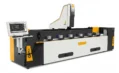

For aluminum window and door factories, cutting is one of the first processes that affects the whole production line. If the cut length is unstable, the angle is inaccurate, or the surface has burrs, later steps such as corner crimping, assembly, sealing, and installation can all become slower and more costly.
For purchasing managers and factory owners in the Middle East and Southeast Asia, the challenge is not only buying a machine. It is choosing equipment that matches local project demand, operator skill level, workshop space, profile types, and daily production volume. A well-selected aluminum cnc cutting machine can help reduce manual measurement errors, improve batch consistency, and support more predictable delivery schedules.
What Is an Aluminum CNC Cutting Machine?
An aluminum cnc cutting machine is a computer-controlled cutting system designed to cut aluminum profiles according to programmed length, angle, and processing requirements. It is commonly used in aluminum door and window production, curtain wall fabrication, industrial aluminum frame processing, and customized extrusion cutting.
Compared with manual or semi-automatic cutting equipment, CNC cutting machines use digital control to manage feeding, positioning, cutting movement, and sometimes angle adjustment. This helps factories handle repeat orders, mixed profile sizes, and project-based cutting lists with better consistency.
In many workshops, the machine is connected with production drawings or cutting lists. Operators input the required dimensions, and the machine completes positioning and cutting according to the set program. This can be especially useful for factories producing sliding windows, casement windows, shopfront systems, partition frames, and aluminum structural components.
Learn more about aluminum cnc cutting machine product details.
Core Advantages for B2B Aluminum Processing
More Consistent Cutting Accuracy
In aluminum window and door production, small cutting deviations can create visible gaps or assembly issues. CNC control helps reduce manual measuring mistakes and supports repeatable cutting results across batches.
Actual cutting accuracy depends on the machine structure, servo system, saw blade quality, clamping method, profile shape, and operator setup. When comparing suppliers, buyers should ask for tested accuracy ranges under realistic working conditions instead of relying only on catalog claims.
Better Efficiency for Batch Production
For factories handling hotel projects, residential buildings, villas, commercial doors, or curtain wall orders, batch cutting efficiency matters. A CNC system can store programs, process repeated sizes, and reduce time spent on manual marking and adjustment.
This is valuable for Middle East and Southeast Asian factories where project schedules are often tight and product types may change frequently. A suitable aluminum profile cutting machine can help production teams move from one batch to another with less downtime.
Cleaner Cutting Surface
A smooth cutting surface reduces secondary finishing work and helps improve assembly quality. The final surface depends on spindle stability, blade speed, feed speed, lubrication, profile wall thickness, and correct clamping.
For visible architectural aluminum profiles, buyers should pay close attention to sample cutting tests. Ask the supplier to cut profiles similar to your real production materials, not only standard samples.
Reduced Dependence on Highly Skilled Manual Operators
Many growing factories face labor turnover or uneven operator experience. CNC cutting does not remove the need for trained workers, but it can make the process more standardized.
With proper training, operators can follow stored cutting programs, check profile placement, monitor blade condition, and perform daily maintenance. This helps factories build a more stable production process.
Common Types of Aluminum CNC Cutting Machines
Single-Head CNC Cutting Machine
A single-head machine is often suitable for smaller workshops, custom orders, or factories with lower daily output. It usually requires less space and lower investment than large double-head systems.
It may be a practical choice for factories that process mixed aluminum profiles, small batches, or repair and replacement orders.
Double-Head CNC Cutting Machine
A double-head cutting machine is commonly used in window, door, and curtain wall production. It can cut both ends of a profile and is often selected for higher-volume production.
Depending on the model, the machine may support angle cutting, automatic length positioning, and digital control. Buyers should compare maximum cutting length, minimum cutting length, angle range, feeding method, and clamping stability.
Automatic Feeding CNC Cutting Line
For larger aluminum extrusion processors, an automatic feeding system can improve productivity and reduce repetitive handling. This type of cnc cutting machine for aluminium extrusion is more suitable for factories with stable order volume, repeat sizes, and enough workshop space for material loading and unloading.
It usually requires better production planning, trained operators, and consistent profile management.
Suitable Aluminum Profiles and Applications
An aluminum CNC cutting system can be used for many aluminum profile applications, but the correct model should be selected based on profile size, wall thickness, and cutting angle requirements.
Window and Door Profiles
These include casement window profiles, sliding window tracks, door frames, mullions, sashes, and glazing bead profiles. For this sector, cutting accuracy and angle consistency are important because they directly affect frame assembly and sealing performance.
Curtain Wall and Facade Profiles
Curtain wall profiles are often larger and may require longer cutting travel, stronger clamping, and stable support during cutting. Buyers should confirm whether the machine can handle the maximum profile width, height, and length used in real projects.
Industrial Aluminum Extrusions
Factories that produce machine frames, solar panel frames, conveyor frames, display frames, and customized aluminum structures may need more flexible cutting programs. The machine should support different profile shapes and frequent size changes.
Explore the CNC aluminum profile cutting machine for extrusion processing.
Key Points to Check Before Buying
Match the Machine to Your Real Production
Before requesting a quotation, prepare a list of your common profile drawings, maximum and minimum cutting lengths, required angles, daily output target, and available workshop space. This allows the supplier to recommend a machine based on actual production needs.
Avoid choosing only by machine size or price. A machine that is too small may limit future orders. A machine that is too advanced may increase training and maintenance costs without adding clear value.
Check Cutting Length, Angle Range, and Clamping Method
For window and door factories, common angle cutting requirements often include 45-degree and 90-degree cuts, but some systems may require special angles. Confirm whether angle adjustment is manual, semi-automatic, or CNC-controlled.
Clamping is also important. Poor clamping can cause vibration, inaccurate length, or damaged profile surfaces. Ask how the machine supports thin-wall profiles, wide profiles, and irregular extrusion shapes.
Review Saw Blade, Cooling, and Chip Removal
The saw blade must match aluminum cutting. Blade diameter, tooth design, spindle power, feed speed, and lubrication all influence cutting quality.
An effective mist lubrication or cooling system helps reduce heat and improve blade life. A proper chip removal design keeps the work area cleaner and reduces the risk of aluminum chips affecting positioning parts.
Ask for Real Cutting Tests
For professional purchasing, sample testing is more useful than general promises. Send your profile drawings or sample profiles to the supplier if possible. Ask for cutting videos, cut surface photos, and measurement results.
This is especially important when buying for Middle East and Southeast Asian markets, where factories may process different aluminum systems from local, European, Chinese, or project-specific profile suppliers.
Consider After-Sales Support and Spare Parts
A reliable machine is not only about the first installation. Buyers should check the availability of spare parts, remote troubleshooting, electrical documentation, operator training, and maintenance guidance.
For overseas factories, clear English manuals, wiring diagrams, video support, and fast spare parts response can reduce downtime.
Request aluminum profile cutting machine specifications and quotation based on your production needs.
FAQ
What is the main use of an aluminum cnc cutting machine?
It is mainly used to cut aluminum profiles for windows, doors, curtain walls, industrial frames, and customized extrusion products. It helps improve cutting consistency, reduce manual measuring errors, and support batch production.
How do I choose between single-head and double-head cutting machines?
A single-head machine is suitable for smaller batches, flexible orders, or limited workshop space. A double-head machine is usually better for higher-volume window, door, and facade production where speed and length consistency are important.
Can one machine cut different aluminum profile systems?
In many cases, yes. However, the machine must match the profile size, shape, wall thickness, and required cutting angle. Buyers should confirm the maximum cutting capacity and test real profiles before placing an order.
What should I check before requesting a quote?
Prepare your common profile sizes, cutting angles, production volume, power requirements, workshop layout, and target automation level. This helps the supplier recommend a suitable configuration and provide a more accurate quotation.
Is CNC cutting necessary for a small aluminum window factory?
Not always. If production volume is low and sizes change often, a semi-automatic solution may be enough. But if the factory wants better repeatability, faster batch processing, and reduced manual errors, CNC cutting can be a practical upgrade.
Conclusion
Choosing an aluminum cnc cutting machine should start from real factory conditions, not only from a machine brochure. For aluminum door and window manufacturers, extrusion processors, and project-based fabrication workshops, the right equipment can improve cutting consistency, reduce rework, and make production planning more reliable.
If you are comparing machine models for your factory, you can request detailed equipment specifications, cutting capacity, layout requirements, and a quotation plan based on your actual aluminum profile drawings and production needs.


