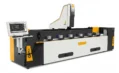
Practical troubleshooting solutions for aluminum cutting machine common faults including cutting burrs, dimensional deviation, equipment alarm and abnormal running noise, fast restore production efficiency.
Full Article Content
Common Fault Troubleshooting for Aluminum Cutting Machine
During long-term continuous cutting processing, aluminum cutting saw machines easily appear typical faults such as cutting edge burrs, size out of tolerance, system alarm and abnormal mechanical noise. Fast fault diagnosis and targeted solutions minimize production stop time and reduce waste aluminum workpiece loss.
1. Cutting Burrs & Rough Section Troubleshooting
Burr and uneven cutting surface are the most frequent complaints in aluminum profile processing, main causes and solutions as below:
– Saw blade wear or tooth damage: Replace new high-precision special saw blade for aluminum cutting, sharpen blunt saw teeth regularly
– Cutting speed mismatch or feed rate too fast: Adjust cutting parameter to match profile thickness and alloy material, reduce excessive feeding speed
– Coolant supply shortage or spray position offset: Clean coolant nozzle blockage, adjust spray angle to fully cover cutting contact area for sufficient cooling and chip removal
– Workpiece clamping loose: Recheck cylinder air pressure and fixture tightness to eliminate profile vibration during cutting
2. Dimensional Deviation & Position Inaccuracy Fix
Finished aluminum profile length or angle exceeds tolerance range, mostly related to transmission and positioning parts:
– Guide rail/rack gap offset: Re-calibrate drive clearance and guide rail parallelism, supplement lubricating grease for smooth traveling
– Positioning block wear or limit sensor drift: Replace worn positioning stops, reset origin position and calibrate travel limit switches
– Workpiece placement skew: Clean worktable surface aluminum residue, standardize manual feeding placement method to keep profile attaching positioning surface closely
3. Machine Alarm & Electrical System Fault Resolution
Control system error alarm will lock machine operation, classify common alarms and corresponding solutions:
– Over-temperature / over-current alarm: Check control cabinet cooling fan, clean drive module dust, confirm motor load without stuck resistance
– Air pressure shortage alarm: Inspect air compressor running status, check pipeline leakage and reset pressure value
– Limit overtravel alarm: Manually reset machine axis position, check limit switch wiring and physical obstacle blocking
4. Abnormal Running Noise Troubleshooting
Unusual clicking, grinding or roaring noise during machine operation indicates internal part abnormal wear:
– Noise from transmission area: Supplement guide rail and rack lubrication, clear embedded aluminum powder inside meshing position
– Abnormal sound from saw head assembly: Check saw blade fixing flange looseness, bearing damage condition
– Pneumatic action impact noise: Adjust cylinder buffer valve to slow down movement speed and reduce mechanical collision
5. Advantages of Standard Fault Troubleshooting
Summarized quick troubleshooting handbook helps operators locate faults rapidly without relying on professional technicians blindly, shorten equipment downtime, lower defective product rate and guarantee continuous stable aluminum cutting production schedule.